![Zift-logo-Color-Large-Transparent.png]](https://learn.zift.io/hs-fs/hubfs/Zift-logo-Color-Large-Transparent.png?height=40&name=Zift-logo-Color-Large-Transparent.png)
What is a chargeback?
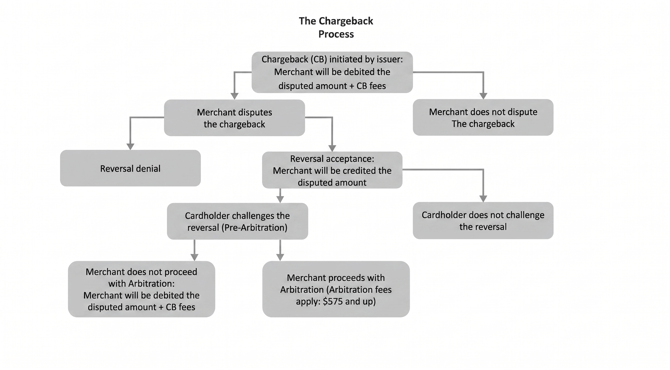
When a cardholder disputes a payment, the card issuer may accept the dispute and initiate a chargeback, depending on the card brand. The disputed amount is then debited from the merchant’s account and credited back to the cardholder.
This debit is processed by the card network, not by Zift.
We assist you during the process but we do not determine the outcome.
The merchant has the option to contest the chargeback in an effort to reverse it and recover the funds.
What is the difference between a Retrieval and a Chargeback?
Think of a Retrieval (or an Inquiry) as a "soft" dispute. The cardholder’s bank is asking for information without taking your money yet. A Chargeback is a "hard" dispute where the funds are immediately debited from your account along with a chargeback fee.
Should I dispute a chargeback?
Before disputing a chargeback, the merchant should assess the disputed amount, the available evidence, the time and effort required, the chargeback fees, and whether it is worth the effort and fees.
Taking no action is treated as accepting the dispute.
Please note that following a reversal, if a merchant receives a second chargeback (Pre-arbitration), the associated chargeback fees will be applied again.
How to dispute a chargeback?
Once you have decided to dispute the chargeback, it is essential to provide a clear and detailed explanation of the situation. Your response should directly address the specific chargeback reason (you can find it in the attached PDF notification and the dispute letter sent to you) and explain why the transaction is valid
Please include any supporting documentation that strengthens your case and helps demonstrate that the charge was legitimate, such as a signed contract or agreement, proof that the customer accepted your terms and conditions (Click-to-accept screenshot), evidence that the service was rendered and any relevant communication with the customer including emails or messages
Keep in mind that the person reviewing the dispute may not be familiar with your business and has access only to the cardholder’s perspective
How can I submit my dispute?
You will need:
-
your Chargeback case number #
-
The case amount $
-
Your email address
Please upload your documents in PDF, JPEG, or TIF format, along with your explanation to the chargeback response portal here.
Please note that videos and recordings are not accepted.
What is the estimated timeframe for a decision on a first chargeback dispute?
Typically, it takes 2 to 3 weeks from the day the dispute is submitted to receive an initial update, though a final decision may take up to 90 days.
If the dispute is resolved in my favor, will the associated chargeback fee also be reimbursed?
The chargeback fee, applied through the card network, is a non-refundable administrative cost and must be paid even if the dispute is resolved in your favor.
I want to accept the chargeback and reimburse the cardholder. Should I still issue a refund
No. Do not issue a refund if you have already received a chargeback notification. The chargeback itself refunds the cardholder. Issuing a separate refund would result in the cardholder being paid twice.
To accept the chargeback, you may respond by either:
-
Accept as a refund. Do not process a separate refund to the cardholder/customer.
or
-
Take no action. Ignore the notification.
What documentation can I submit for a dispute, and how can I increase the likelihood of a favorable outcome?
Along with a clear explanation, you may submit the following documents, depending on the reason for the dispute:
-
A signed agreement
-
Cancellation policy
-
Refund policy
-
Proof of delivery
-
For online Card-Not-Present transactions, a screenshot of a "Click to Accept" checkbox proving the cardholder agreed to your policies before checkout
-
A refund receipt, in case the transaction has already been refunded.
-
Email exchanges with the customer
-
CSC (Card Security Code) and AVS (Address Verification System) match confirmations
I contacted the customer, and they agreed to drop the chargeback. When will I get my funds back, and what else should I do?
Typically, it takes 2 to 3 weeks to receive the reversal. Even if the customer claims they canceled the dispute, you should still take action to protect your merchant account and respond to the chargeback.
If the formal reversal has not been processed within five days of the required response date, we recommend asking the cardholder to sign a chargeback Letter of Acceptance as a show of good faith. You can then upload the signed document to the portal to resolve the dispute.
Is it possible for a chargeback to be initiated seven months after the original transaction date?
The standard window to file a chargeback is 120 days from the expected service delivery date, rather than the transaction processing date.
Will my account be shut down if my chargeback ratio is too high?
Successfully disputing a chargeback doesn’t resolve all the repercussions associated with them. Even when the merchant “wins” a chargeback, the customer’s dispute still impacts their overall chargeback ratio. A high ratio may result in higher fees and potentially even the risk of having their merchant account frozen
If an elevated dispute rate is detected, we will reach out to discuss potential solutions
How can I check the status of a chargeback?
If no reversal or denial notification has been received for your dispute, you can email us at resolutions@zift.io to get a status update. Please keep in mind that the outcome of the dispute may take a few weeks to be received.
What are my options if the chargeback is decided against me and I am unsatisfied with the resolution?
If the card brand's dispute process is exhausted, you may consider pursuing legal action, such as filing a claim in Small Claims Court.
Card Network Dispute Processing Overview
Once a cardholder disputes a payment, the process begins. Dispute workflows vary depending on the card network and the specific reason code. Some disputes begin as a retrieval request, so it’s important to review the notification carefully to understand your options.